MPCR Lab at D-Wave Qubits 2026 Conference
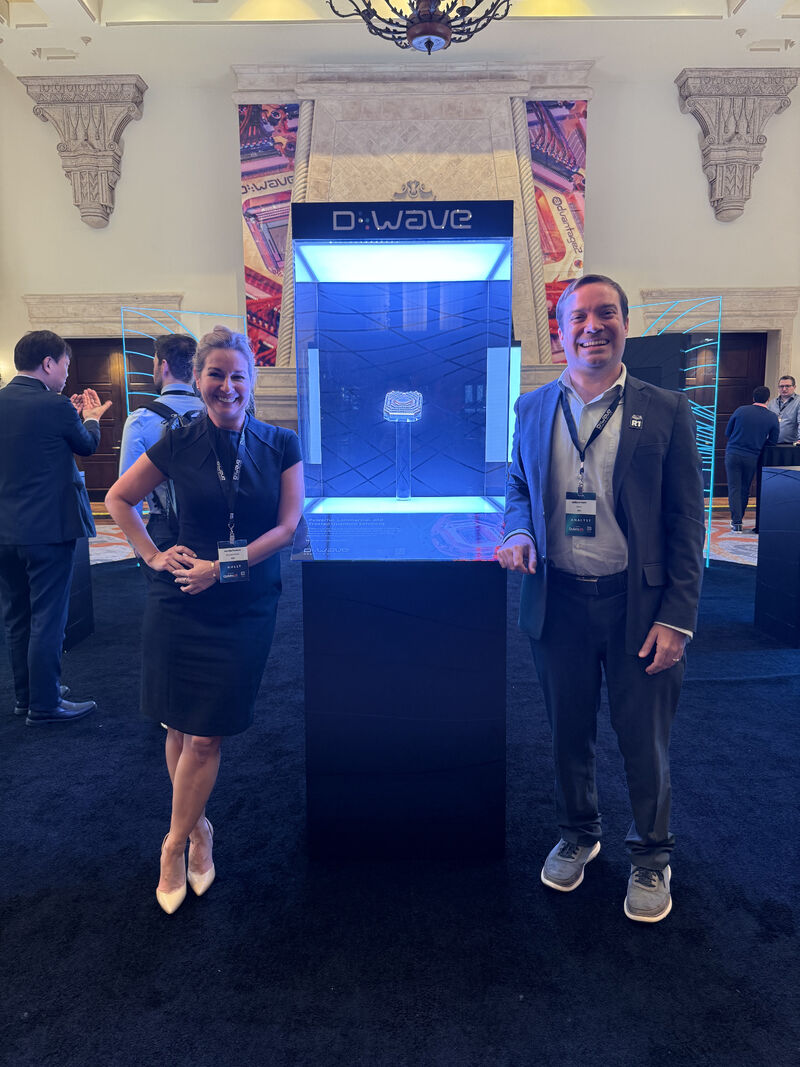
MPCR Lab participated in the D-Wave Qubits 2026 Conference, engaging in strategic discussions with leaders advancing real-world quantum computing.
MPCR Lab participated in the D-Wave Qubits 2026 Conference, engaging in strategic discussions with leaders advancing real-world quantum computing.
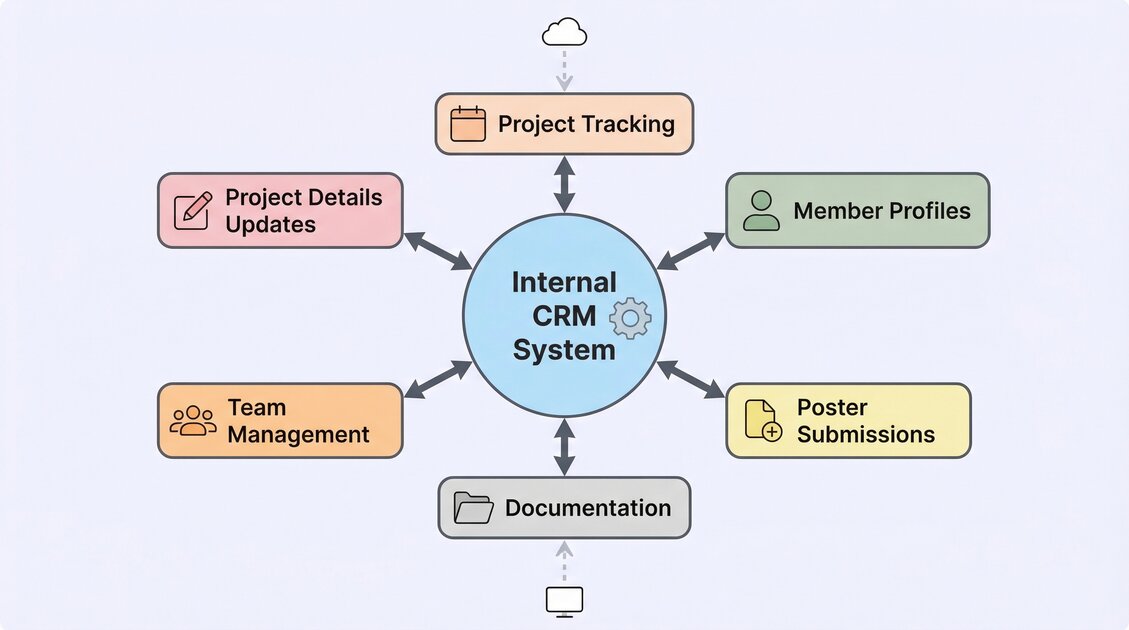
Over the past several weeks, the MPCR Lab has rolled out a series of infrastructure improvements designed to make project management, member coordination, and public communication more efficient.
Dr. Elan Barenholtz has published new research challenging claims that language models build internal world models. The paper, “World Properties without World Models,” demonstrates that spatial and temporal structure (city coordinates, historical birth years) can be recovered from simple static word embeddings (GloVe, Word2Vec) with R² values of 0.71-0.87 — suggesting this information is already latent in text co-occurrence statistics, not evidence of world-like representations in LLMs.
Prof. Susan Schneider and Mark Bailey have published “Superpsychism” in the Journal of Consciousness Studies. The paper addresses two deep mysteries — the nature of consciousness and the nature of spacetime — developing a new “superpsychist” form of panpsychism grounded in their Prototime Interpretation of quantum mechanics, using quantum entanglement as an inroad to both questions.
FAU’s Department of Philosophy, in partnership with the Center for the Future of AI, Mind and Society, hosted the 4th Annual Philosophy of Video Games Conference. The two-day event brought together philosophers, game scholars, students, and players to explore the meaning, ethics, aesthetics, and cultural power of video games — featuring talks on gamification of leisure, aesthetics of competition, empathetic gameplay, and ludonarrative dissonance.
Profs. William Hahn and Elan Barenholtz presented at an Ekkolapto Polymath Salon in San Francisco on Biological Prompt Engineering, alongside Andres Gomez-Emilsson (Qualia Research Institute) and Rachel St. Clair (ServaMind). Topics included world models, non-verbal prompting, meditation as biological prompt for psychedelic effects, and training the body to memorize the effects of substances.
In Disputatio, Prof. Susan Schneider argues that today’s LLMs may be early components of an emergent “global brain” network, linking humans, cloud platforms, and the internet of things into complex, evolving megasystems. The paper explores whether weakly emergent AI megasystems can elude traditional oversight frameworks.